Optimal Engine Air Filter Replacement Frequency | California Driving Tips
Your engine air filter helps keep dust, grit, leaves, and road debris out of your engine, which supports smoother performance and better long-term reliability. The right replacement schedule depends on your vehicle, your driving habits, and the conditions around you, especially if you drive in dusty, dry, or stop-and-go areas of California. If you are unsure whether your filter is still doing its job, Lee's Service can inspect it and help you decide whether it is time for a replacement.
How often should car air filter be changed?
For many vehicles, the best answer is: follow your owner's manual first, then adjust for real-world driving conditions. If you are wondering how often should car air filter be changed, most drivers should think in terms of regular inspections, not just mileage. A filter may last longer for someone who mostly drives clean highways, while another driver may need service sooner because of dust, wildfire ash, construction zones, unpaved roads, or heavy city traffic.
The engine air filter is not the same as the cabin air filter. The cabin filter cleans air that comes through your vents, while the engine air filter cleans air before it enters the engine. Both matter, but a dirty engine air filter can affect how efficiently your engine breathes.
That is why the better question is not only how often to replace engine air filter, but also what kind of driving your vehicle handles every week. A quick visual inspection during routine maintenance can often reveal whether the filter is clean, dusty, clogged, damp, or damaged.
The engine air filter has a simple but important job
Your engine needs a steady mix of air and fuel to run properly. Before that air reaches sensitive engine components, it passes through the engine air filter. The filter traps particles that should not be pulled into the intake system, helping protect internal parts from unnecessary wear.
When the filter is clean, air can move through it more easily. When it becomes packed with dirt, the engine may have to work harder to draw in enough air. Modern vehicles are designed to compensate for many changing conditions, but a neglected filter can still contribute to sluggish performance, reduced efficiency, or rougher operation.
A dirty filter also makes routine maintenance less predictable. If the filter is badly clogged, other symptoms may appear that feel like larger engine issues. Checking the filter is a simple step that can help rule out one common and inexpensive maintenance item before assuming something more serious is wrong.
Signs your engine air filter may need replacement
Mileage is useful, but symptoms matter too. You do not need to wait for a warning light to think about the condition of your filter. In many cases, the filter gives visual and performance clues before it becomes a bigger concern.
Watch for signs such as:
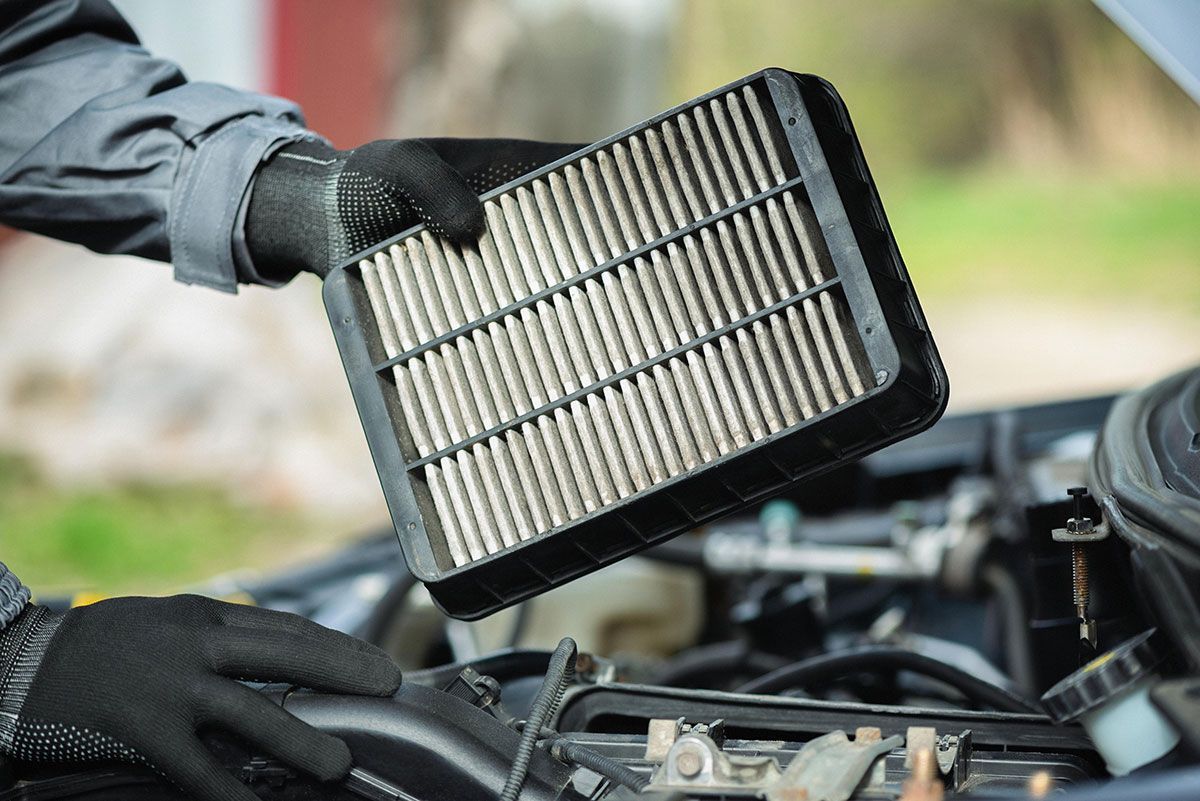
- Visible dirt or dark buildup: A used filter will not look brand-new, but heavy dust, caked debris, or dark patches can mean airflow is restricted.
- Reduced acceleration: If your vehicle feels less responsive than usual, the engine may not be getting air as freely as it should.
- Lower fuel economy: A dirty filter is not the only possible cause, but it can be one piece of the puzzle.
- Rough idling or hesitation: Inconsistent airflow can sometimes contribute to uneven engine behavior.
- Unusual engine sounds: A restricted filter can change how the intake system sounds, especially under acceleration.
- Service reminder timing: If your vehicle is already due for routine maintenance, it is a good time to inspect the filter.
These signs do not automatically prove the engine air filter is the problem. They simply mean the filter should be checked along with other basic maintenance items. If you are not comfortable opening the air filter housing or judging the filter's condition, a technician can inspect it quickly.
How often do you change engine air filter in California driving?
If you are asking how often do you change engine air filter in California, the answer often depends on local conditions as much as mileage. California drivers may deal with dry summers, agricultural dust, mountain roads, coastal moisture, traffic congestion, wildfire smoke, and construction debris. Any environment with extra particles in the air can cause a filter to load up faster.
Drivers in cleaner conditions may be able to follow the standard interval in the owner's manual. Drivers in harsher conditions may need inspections more often. This is especially true if your vehicle regularly travels on rural roads, through dusty job sites, or in areas affected by seasonal smoke and ash.
California's varied geography also matters. A vehicle used mostly for commuting on paved highways may have a different maintenance rhythm than one used for weekend trips, desert drives, or work routes near dirt lots and construction zones. That is why a local inspection can be more helpful than a one-size-fits-all rule.
Mileage is only one part of the decision
Many drivers search for how often to change engine filter because they want a simple mileage number. Mileage matters, but it should not be the only factor. A filter's condition depends on how much air has passed through it and what was in that air.
Think of replacement timing as a combination of three things:
- Manufacturer guidance: Your owner's manual gives the baseline schedule designed for your specific vehicle.
- Driving environment: Dust, smoke, pollen, sand, and debris can shorten the useful life of the filter.
- Filter condition: A visual inspection can confirm whether the filter still looks serviceable or is ready to be changed.
This approach prevents two common mistakes. The first is replacing the filter too early without checking it. The second is waiting too long simply because the vehicle has not reached a certain mileage milestone. A practical maintenance plan uses both the schedule and the actual condition of the part.
What happens if you wait too long?
A neglected engine air filter can restrict airflow and make your engine work under less-than-ideal conditions. You may notice weaker throttle response, less consistent performance, or a drop in efficiency. In severe cases, a clogged or damaged filter can allow contaminants to get closer to components that should stay clean.
The bigger issue is not that one late filter change will automatically ruin an engine. It is that small maintenance delays can stack up. When a vehicle is already dealing with old fluids, worn spark plugs, low tire pressure, or overdue service, a clogged filter adds another burden.
Changing the filter when needed is a simple way to support the vehicle's overall health. It is usually a straightforward maintenance item, and it can be inspected during an oil change or routine service visit. For many drivers, that makes it easy to keep on schedule without making a separate appointment just for the filter.
A simple checklist before replacing the filter
Before you decide whether to replace the engine air filter, use a practical checklist. This helps you avoid guessing and gives you a better sense of whether service is needed now or can wait.
Check the following:
- Owner's manual interval: Look for the recommended inspection and replacement schedule for your vehicle.
- Recent driving conditions: Consider dusty roads, smoke exposure, off-road driving, construction areas, or long periods of heavy traffic.
- Filter appearance: Look for heavy dirt, leaves, bugs, oily residue, moisture, or damaged pleats.
- Vehicle symptoms: Note hesitation, poor acceleration, rough idle, or lower fuel economy.
- Service history: If you cannot remember the last replacement, it is worth having the filter inspected.
- Professional opinion: Ask a trusted shop to show you the filter if replacement is recommended.
That last point matters. A good service experience should be clear, not mysterious. If a technician recommends a new filter, you should be able to understand why based on condition, mileage, or driving environment.
Why professional inspection can be worth it
Some drivers replace their own engine air filter, and on certain vehicles it is a simple task. On others, the air box may be awkward to access, clips may be brittle, or the housing may need to be seated carefully so unfiltered air does not bypass the filter. If you are unsure, professional service can help prevent small installation mistakes.
A shop can also look beyond the filter itself. If the filter is unusually dirty, damp, oily, or damaged, that may point to another issue worth checking. A technician can make sure the housing is secure, the intake area is clear, and the correct filter type is being used.
Lee's Service can help drivers make a practical decision rather than replacing parts blindly. If the filter is still in good condition, you can keep driving with confidence. If it is clogged or damaged, replacing it can help restore proper airflow and support smoother engine operation.
Make air filter checks part of routine maintenance
The easiest way to stay ahead of engine air filter problems is to pair inspections with regular maintenance. Instead of trying to remember a separate schedule, ask for a filter check during oil changes, seasonal service, or before long road trips. This is especially useful before summer travel, dusty routes, or periods when smoke and airborne debris may be more common.
You can also keep a simple maintenance note in your glove box or phone. Record the date, mileage, and whether the filter was inspected or replaced. Over time, this gives you a clearer pattern for your specific vehicle and driving conditions.
If you frequently ask yourself how often to replace engine air filter, that record can turn a vague question into a practical answer. You will know what your manual recommends, what your driving conditions are like, and how your filter typically looks at each service.
The takeaway for drivers
There is no single replacement schedule that fits every vehicle and every driver. Start with your owner's manual, then adjust based on the air your vehicle actually drives through. Dust, smoke, traffic, rural roads, and harsh conditions can all make more frequent inspections worthwhile.
If you are in
California and want a clearer answer for your specific vehicle,
Lee's Service can inspect your engine air filter during routine maintenance. A quick check can tell you whether the filter is still doing its job or whether replacing it now is the smarter move.